The Oeconomus Economic Club, a monthly event series launched by Oeconomus in February 2025, has returned! In the summer, heat domes and severe droughts joined existing crises like the war in Ukraine, fuel shortages, and Europe’s declining competitiveness. The topic could be nothing other than what can be done and how to adapt in times of crisis. The event, titled Adapting to Crises: International, Central European, and Hungarian Perspectives and held under Chatham House Rules, featured international guest Mandeep Mahendru, a professor from the Institute of Chartered Financial Analysts of India, who visited Hungary as a guest of the National University of Public Service.
Crisis Management Requires Routine
“Since the coronavirus pandemic, we have suffered a series of crises: the war in Ukraine broke out, our competitiveness fell behind, and this year our entire continent experienced the effects of climate change,” said Péter Törcsi, opening the event. The President of the Oeconomus Economic Research Foundation recalled that Central Europe had always been more resilient in crises because, despite political debates, it managed to remain culturally homogeneous. “In recent years, however, this may have changed. Much like our Western European friends, our region is now divided on where Europe should be heading,” he explained.
He warned that this is a particularly major problem for Hungary, as the direction was clear between 2010 and 2026, but this has now changed. “When the country, and indeed the continent, faces such serious challenges, experience and routine are needed to handle them. The new government does not yet have this. They owe solutions, whether regarding the economy, climate change, or the water situation,” he stated, assessing the period since the elections.
Péter Törcsi emphasized that the Oeconomus Economic Research Foundation remains committed to objective, fact-based economic and geopolitical research, and stands ready to provide a forum for discussing differing opinions.
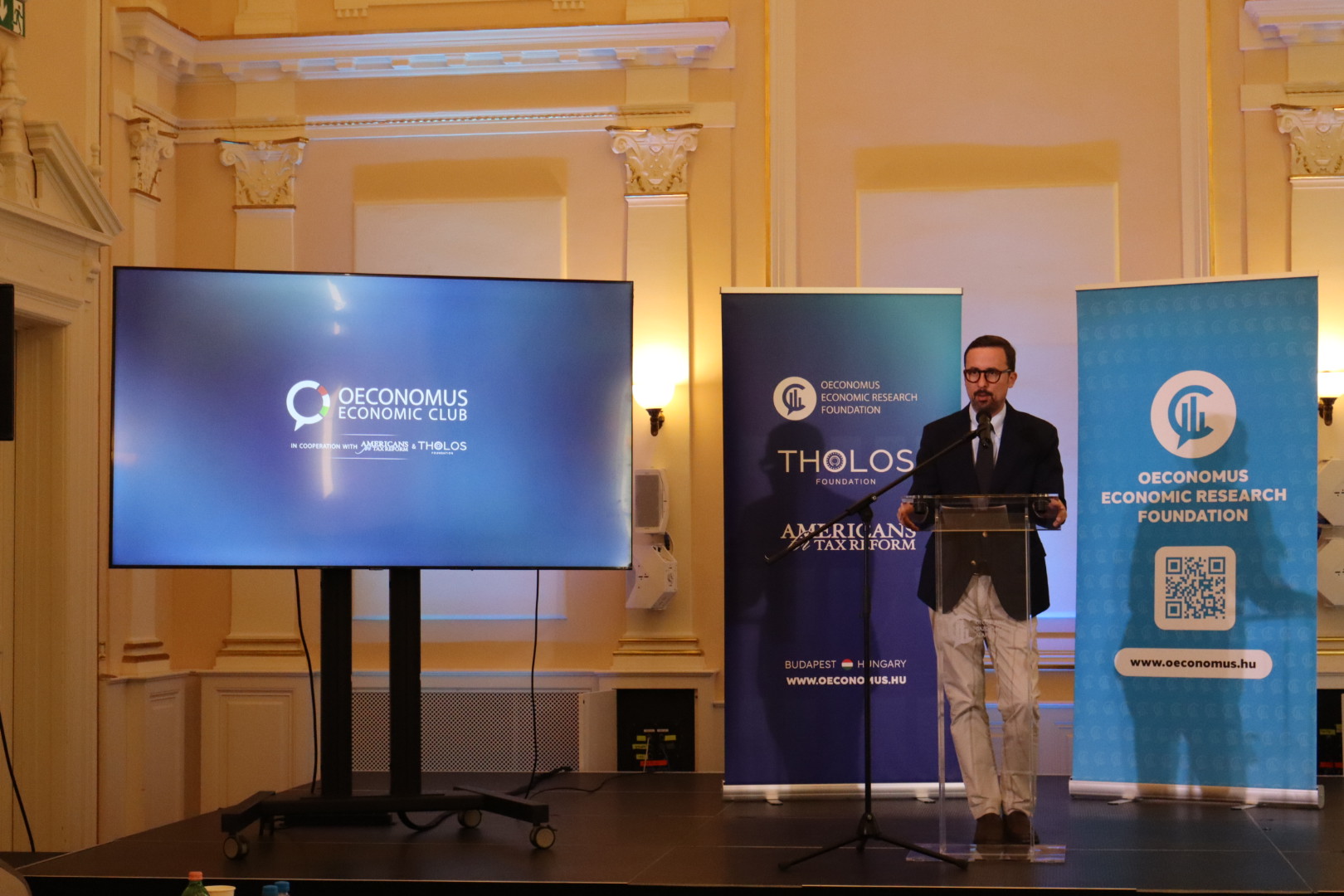
Péter Törcsi, president of Oeconomus opens the Oeconomus Economic Club.
Getting Used to Crisis
Mandeep Mahendru highlighted in her presentation that economic crises should no longer be treated as exceptional, one-off events: the consecutive challenges of the pandemic, inflation, energy market shocks, and geopolitical uncertainty demand lasting adaptation. She argued that the key to success is a so-called “adaptive architecture”—building an institutional, financial, and social framework that transforms shocks into manageable adaptation.
“The most important question is not when a crisis will end, but how well a country can weather it without lasting damage,” stated the economist from the Institute of Chartered Financial Analysts of India. Regarding Hungary and Central Europe, she assessed macroeconomic adjustment, European integration, and strengthening household financial reserves as the most critical factors. Meanwhile, India’s example shows that domestic demand and financial inclusion can increase an economy’s resilience.
“Resilience is not just demonstrated by whether we avoid a recession; it is also proven by whether we maintain the capacity to recover,” she warned.
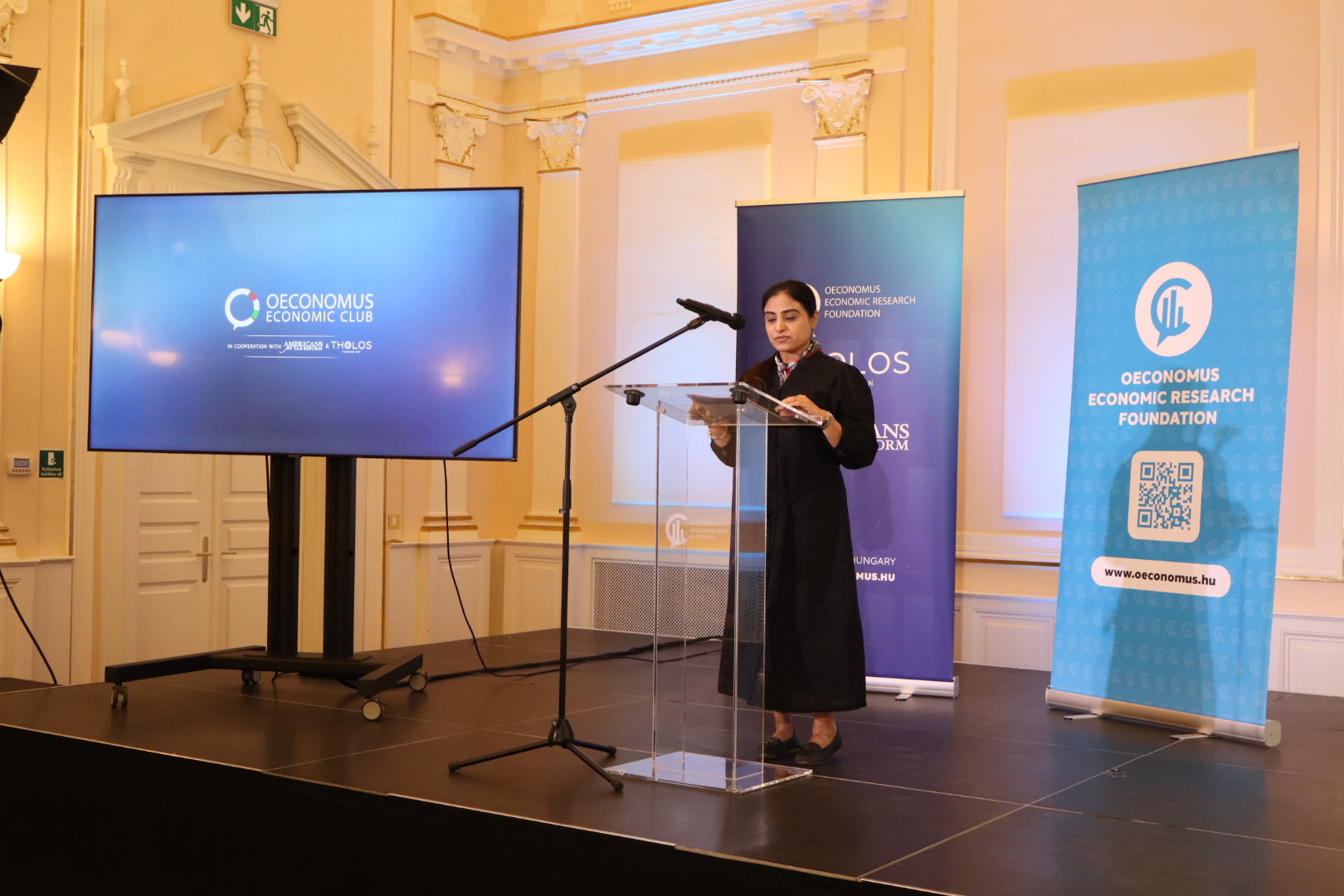
Mandeep Mahendru.
Governments Come and Go
Opening the floor for remarks, Anton Bendarzsevszkij, Director of Oeconomus, recalled participating in a seminar in Poland after the Russian occupation of Crimea in 2014, where expert participants outlined various scenarios. “The chances of a global pandemic or a full-scale war breaking out in Ukraine were deemed low back then. Since then, these have become reality. Are we ready for another crisis now?” he posed to the audience. He cited hybrid attacks as an example, where Scandinavian countries could serve as a model.
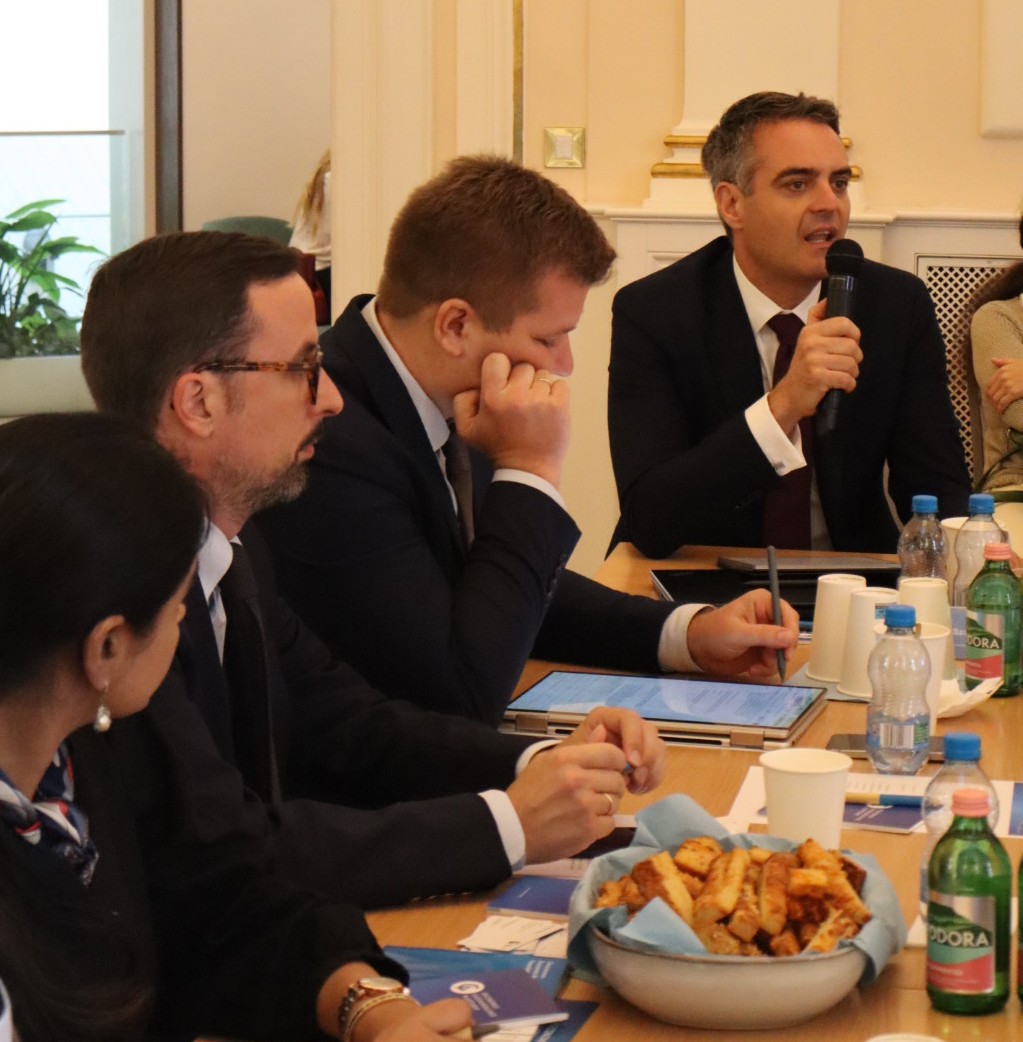
“Effective crisis management requires solid foundations, institutions, and governments. Yet, according to a study monitoring 25 European democracies since 2000, governments serve an average of 1.7 years, with a median of barely 16 months,” pointed out Szabolcs Pásztor. The Director of Research at Oeconomus concluded that the European Union is politically unstable. “Of course, this doesn’t mean following the example of Cameroon, where Paul Biya has been president since 1982,” he added jokingly as an extreme example. “However, during crises and challenges, strong political foundations are necessary. It does not favor long-term solutions when governments come and go!” he warned.
Should We Prepare for an Alien Invasion Too?
“It is difficult to think positively about Europe’s fate these days. The continent has not adapted well to challenges,” admitted security policy expert Péter Siklósi. He noted that Europe still lacks a real strategy regarding Ukraine, relations with Russia, or closing the competitiveness gap. He warned that the bigger problem is that there isn’t even a unified vision on how to change this, as ideology continues to override interests. “You cannot physically prepare for every crisis because there will never be enough resources. Mentally, however, you can—it costs nothing. The key is to build a system that can react flexibly during a crisis,” he outlined.
An analyst with a legal background pointed out that crises have proven that only nation-states can react quickly and effectively. He believed this serves as another argument against the logic of Brussels centralization.
“Resources are finite. It’s impossible to prepare for every crisis. Should we prepare for an alien invasion next?” posed a leading economist as a vivid example. In his assessment, the crisis dynamic has changed in recent years because there is essentially no break between crises. “We live in an era of constant crisis. Economic textbooks need to be rewritten because nothing works the same anymore,” he stated.
Following this, one speaker questioned what kind of crisis artificial intelligence might cause and how it could contribute to managing it. Another highlighted that a crisis simultaneously creates opportunity. Meanwhile, a business professional criticized how Hungary relies too heavily on the government—expecting them to solve every crisis—whereas people in other countries seek out market opportunities.

Foreign policy expert, journalist, press officer. He was a foreign policy journalist and editor for fourteen years, mainly at Magyar Nemzet. He specializes in the Middle East and North Africa. As a journalist, he has visited several countries and conflict zones in the region. He has reported from Israel and Palestine, Lebanon, Iraq, Turkey, Jordan, and Saudi Arabia, but he has also visited Ukraine, Nagorno-Karabak, and Cyprus.


